What should my macros be on a keto diet?
On a ketogenic diet, most adults keep carbohydrate low, protein moderate and fat as the largest share of remaining calories. A common practical starting point is around 20-50 grams of net carbs, roughly 20% of calories from protein, and the rest from fat, adjusted to your goal and body size.
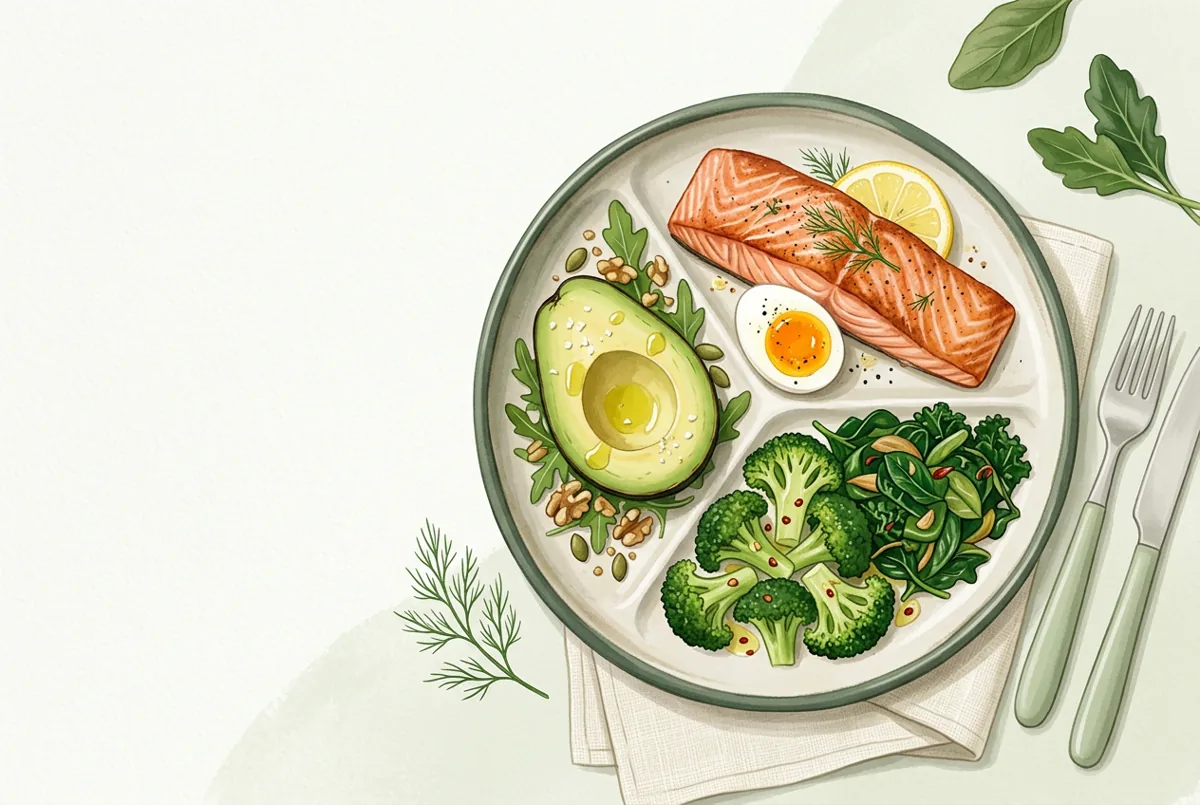
Setting Practical Keto Macro Targets
Keto macros describe how your daily calories are split between carbohydrate, protein and fat. Rather than one fixed ratio, the sensible approach is to anchor carbohydrate low enough to support ketosis for you, set protein at a level that protects lean mass and keeps you full, and let fat fill the remaining energy.
How the numbers are usually built
First, an estimate of your daily calorie need is made from weight, age, gender and activity. Carbohydrate is then set to a low fixed target, protein is calculated as a percentage of calories, and fat receives whatever calories remain. Because fat is energy-dense, small changes in oils, cheese and nuts move calories quickly. To see this worked out for your own details, you can estimate your daily keto macros and compare the weight-loss, maintenance and gain figures side by side.
Why your numbers differ from someone else's
Body size, activity, training, hormones and individual carbohydrate tolerance all shift the result, so two people at the same weight can need different intakes. Treat the output as a starting estimate and review it against real trends in weight, energy and hunger over several weeks.
Common misunderstanding
A calculator cannot confirm ketosis or guarantee results; it only provides a plan to test. If you have a medical condition or take medication that is affected by diet, get individual guidance first. For more topics like this, you can browse the complete keto diet FAQ.